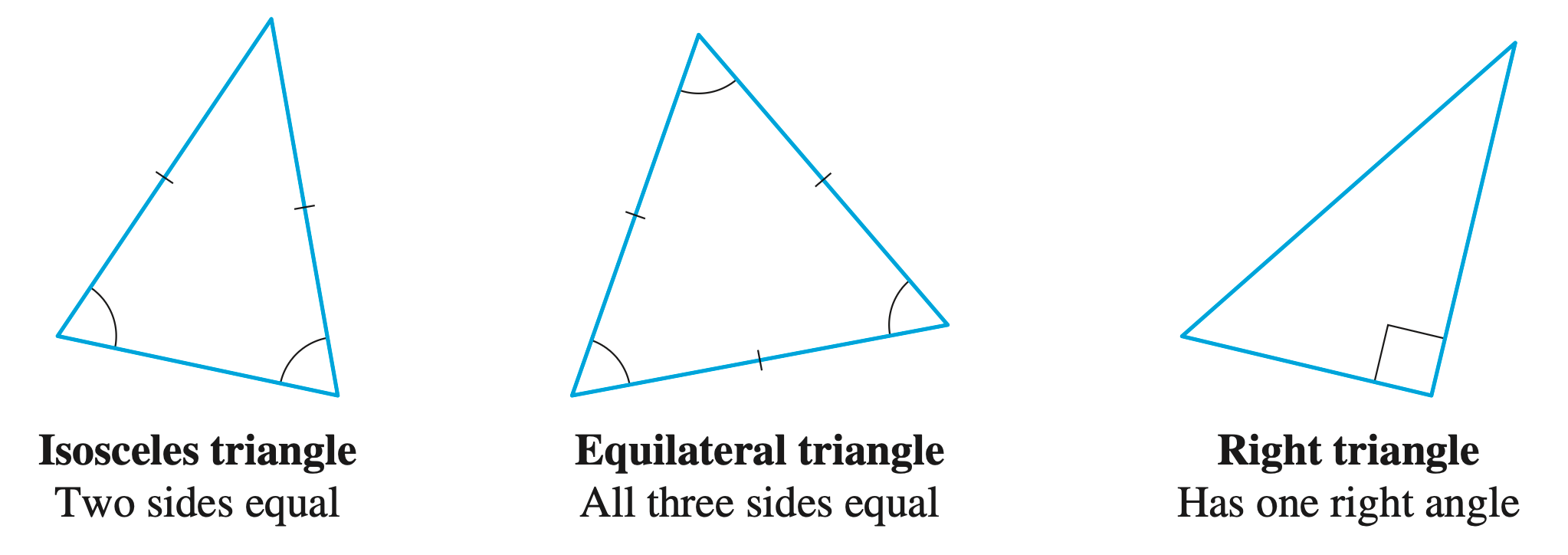
We start by recalling the names of some special types of triangles. In an isosceles triangle, two sides are equal, and the angles opposite the equal sides are equal. In an equilateral triangle, all three sides are equal and all three angles are equal to each other. In a right triangle, one angle is a right angle and the other two angles are acute.
Congruent Triangles
Two geometric figures are congruent if they are of the same shape and size. Two line segments are congruent if they have the same length, two angles are congruent if they have the same measure.
Two triangles are congruent if their vertices can be matched up so that corresponding sides and angles are congruent. We write
to mean that triangle
The following properties lead to congruent triangles:
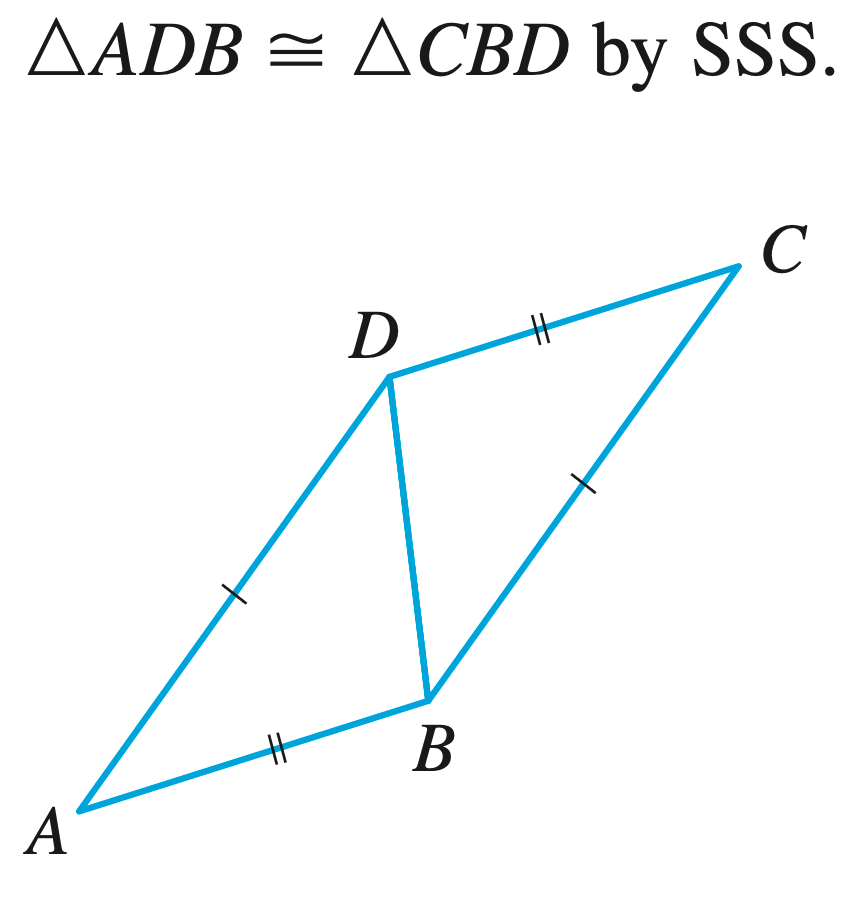
- Side-Side-Side (SSS). Each side of one triangle is congruent to the corresponding side of another triangle.
- Side-Angle-Side (SAS). Two sides and the included angle in one triangle are congruent to the corresponding sides and angle in another triangle.
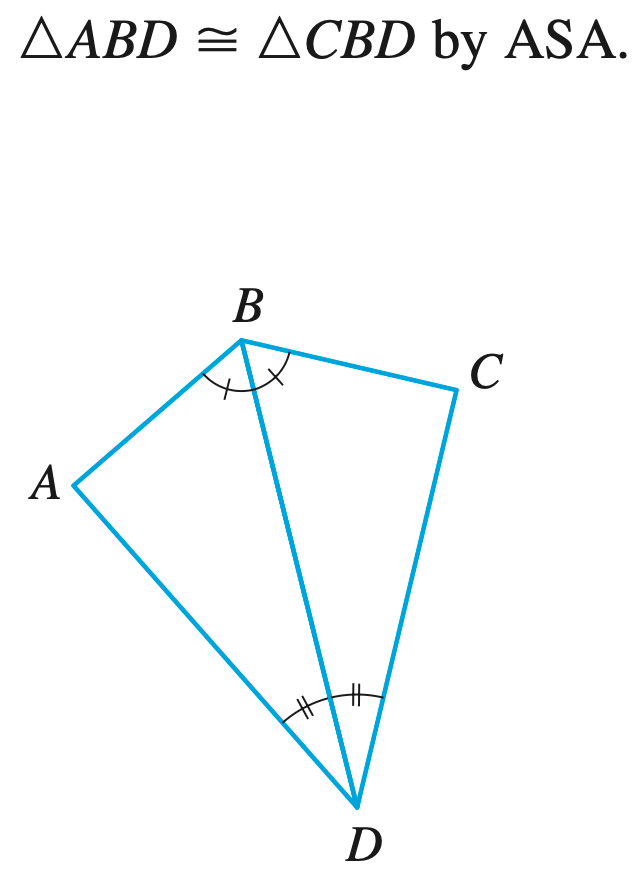
- Angle-Side-Angle (ASA). Two angles and the included side in one triangle are congruent to the corresponding angles and side in another triangle.
For example,
Similar Triangles
Two geometric figures are similar if they have the same shape, but not necessarily the same size. Two triangles are similar if their vertices can be matched up so that corresponding angles are congruent. In this case the corresponding sides are proportional. We write
to mean that triangle
The sides are proportional as follows:
If we know two angles in a triangle, the third is determined. Therefore to prove two triangles are similar, we need only show that two angles in one triangle are congruent to two angles in the other. For example, consider the below figure:
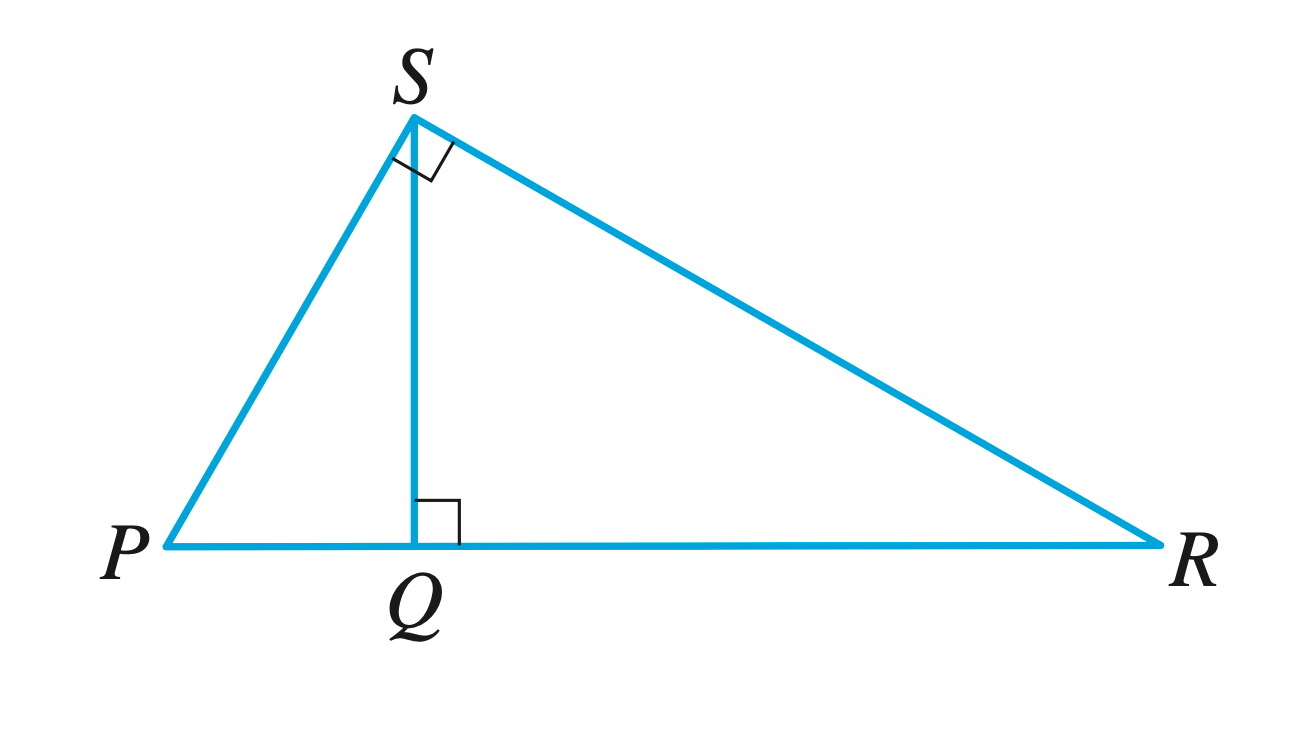
Notice that all three triangles in the figure are right triangles, we have
That is,
Parallel Lines
If two lines intersect, then opposite angles formed by the lines are equal.
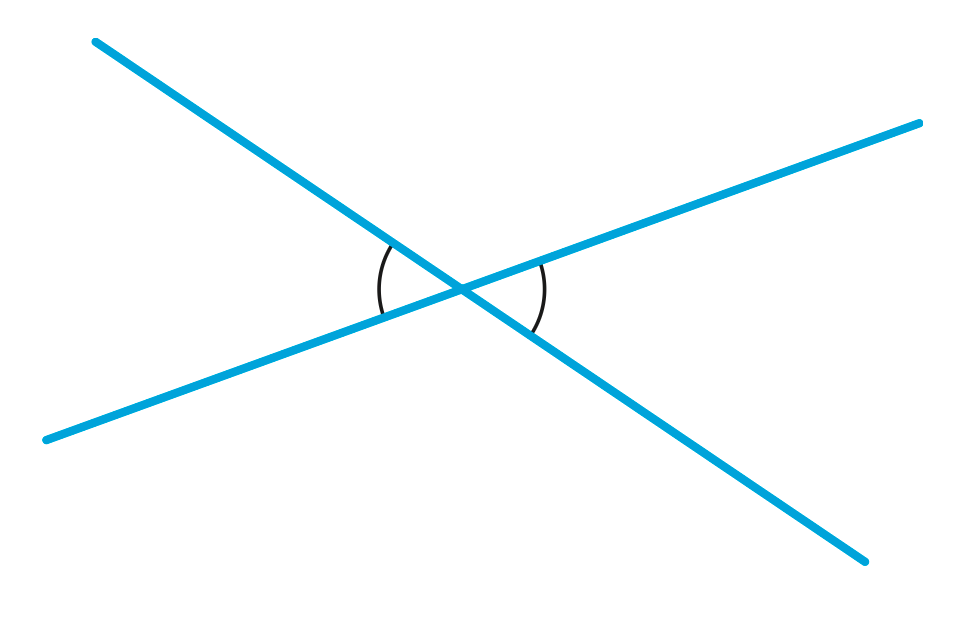
Two lines that never intersect are called parallel. Two lines are parallel if and only if corresponding angles formed by the lines and a transversal–that is, a line that intersects both lines, are congruent. The pairs of angles formed by the lines and the transversal are shown in below figure.
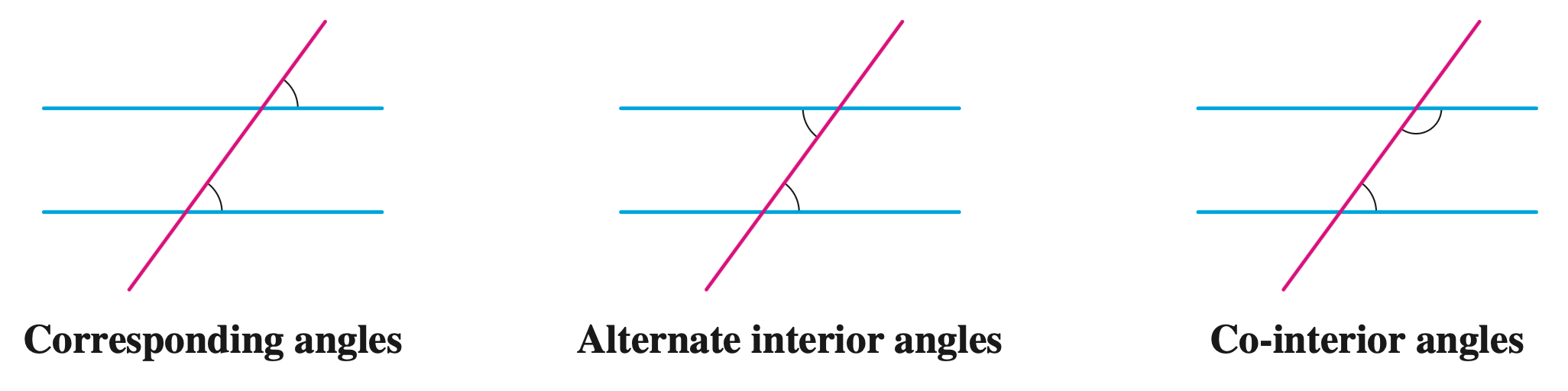
Equivalent ways of showing two lines are parallel include showing that the alternate interior angles are equal and showing that the co-interior angles add up to
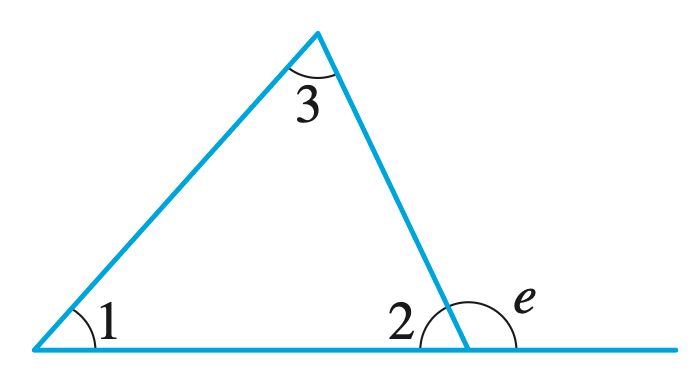
An exterior angle of a triangle is an angle between a side of the triangle and an outward extended adjacent side, which is equal to the sum of the two opposite interior angles.
A quadrilateral is a four-sided figure. A trapezoid is a quadrilateral with one pair of parallel side. A parallelogram is a quadrilateral with two pairs of parallel sides.

Let
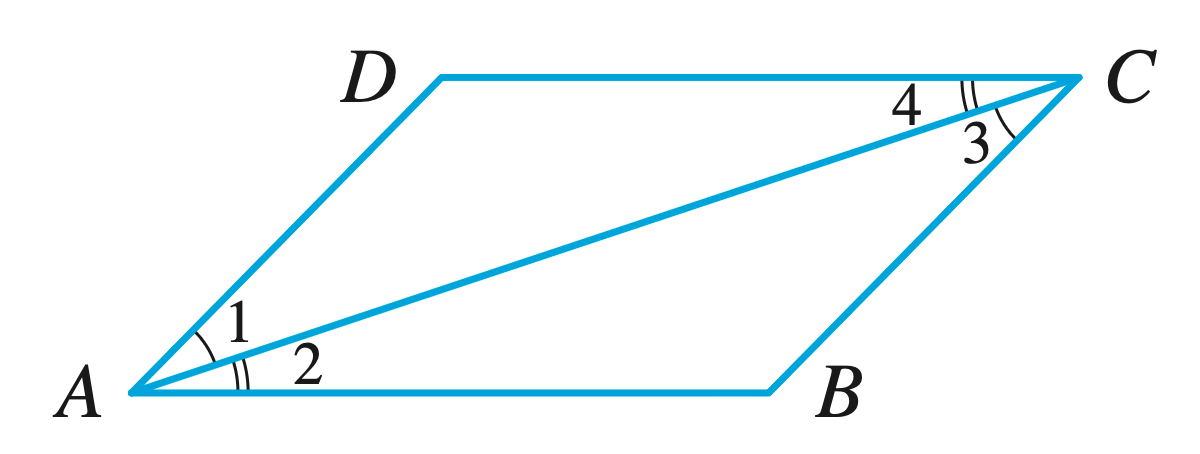
It follows that
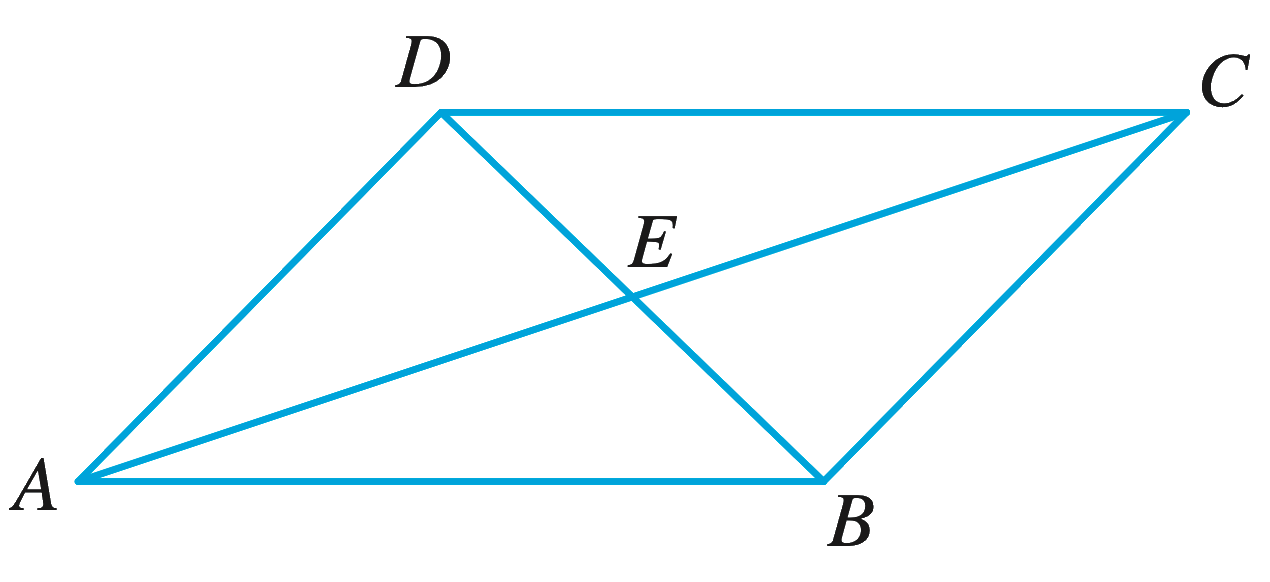
Since the diagonals are transversals, we see
Circles
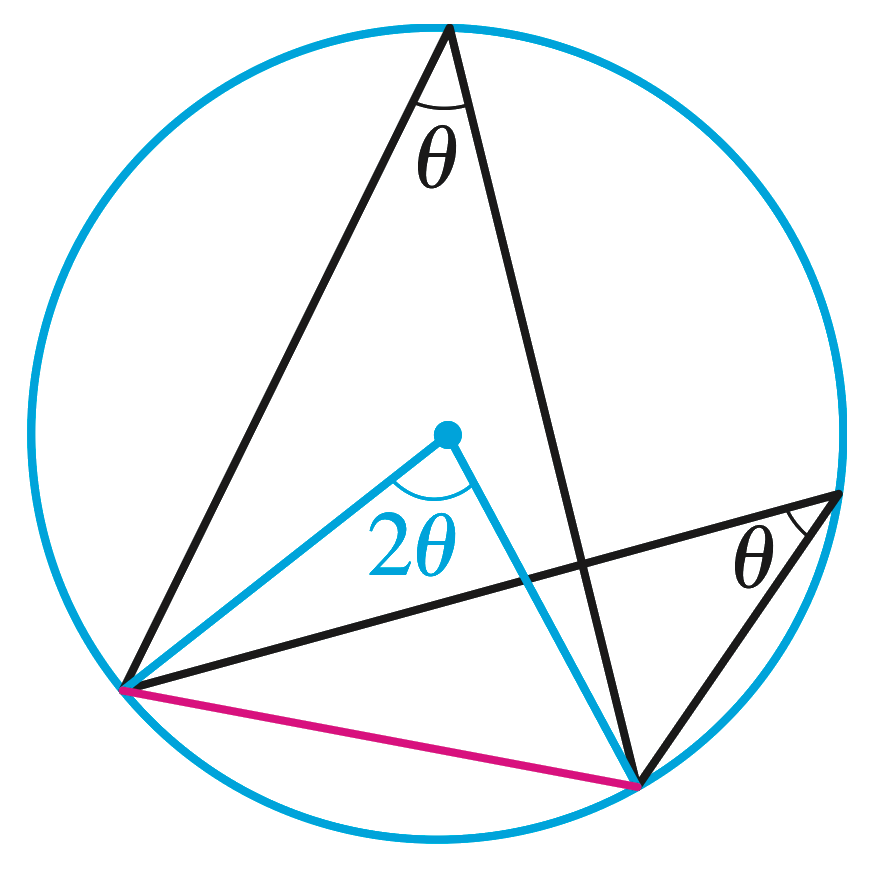
A line segment whose endpoints lie on a circle is called a chord of the circle. The angles in the below figure is said to be subtended by the chord either at the center of the circle or on the circle.
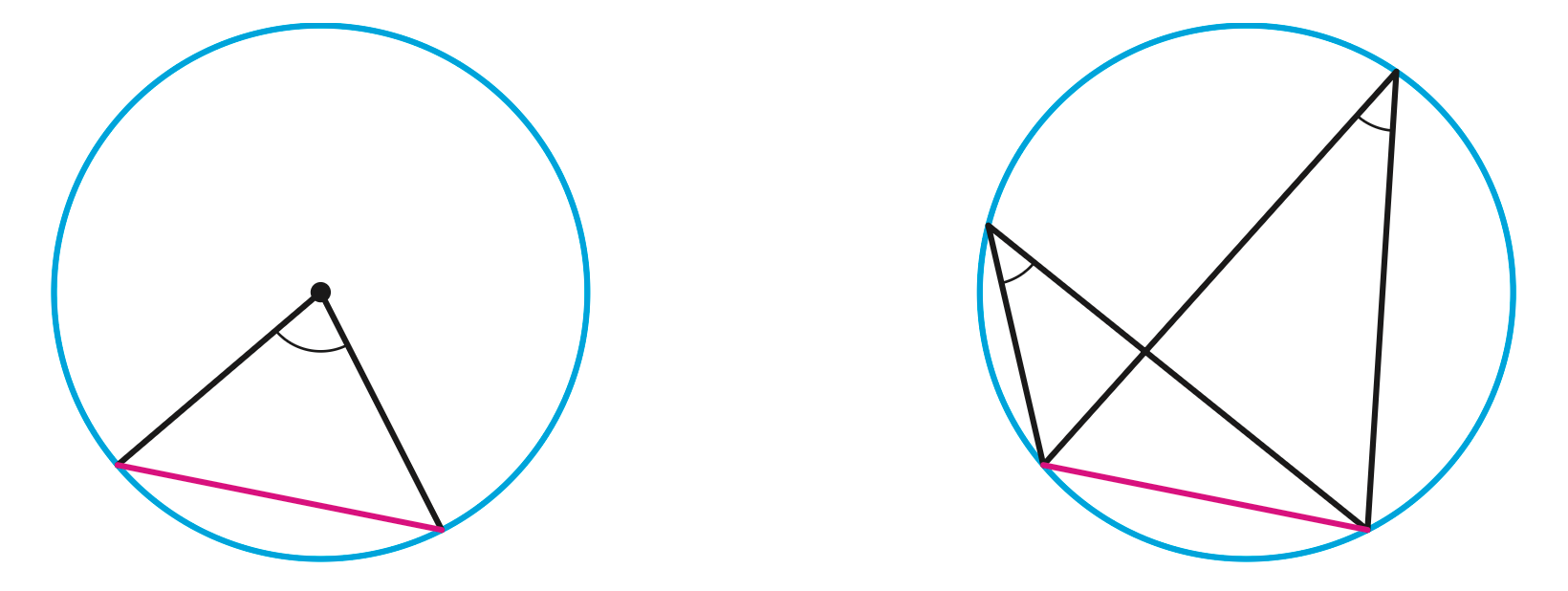
To understand the correlation between the angles, we look at the following case where the center of the circle is inside
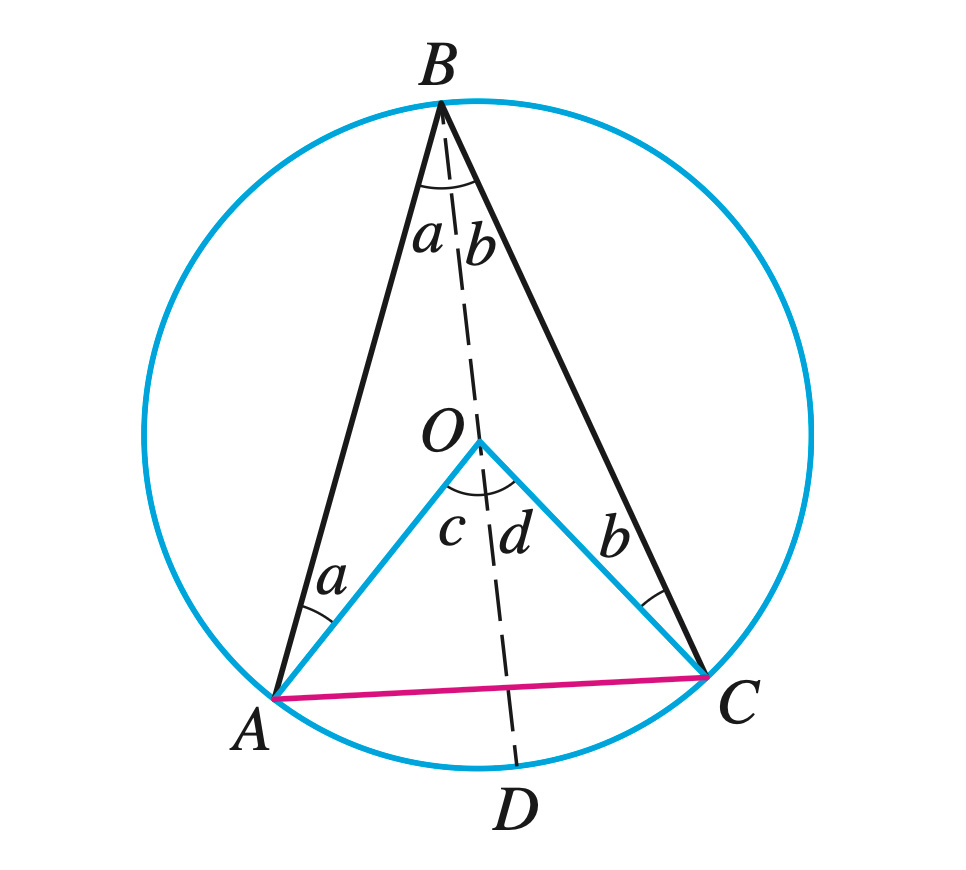
We see